PNG vs JPG asset selection
PNG
->
JPG
Asset-type decision
Practical Guide
Stop guessing between PNG and JPG with clear rules for logos, UI assets, and product photos.
PNG vs JPG asset selection
Asset-type decision
Quick summary
Stop guessing between PNG and JPG with clear rules for logos, UI assets, and product photos.
Changelog: content updated 2026-02-24, references verified 2026-02-24.
Field Note
Use PNG for precision and transparency, JPG for photographic efficiency, and avoid forcing one format across both logo and product contexts.
Keep PNG or SVG to preserve crisp edges and avoid halo artifacts common in lossy exports.
Use JPG/WebP variants tuned for commerce grids so quality remains high without dragging page speed.
Pair transparent brand marks with compressed photo layers instead of flattening everything into one heavy PNG.
Pre-publish QA questions
Format Ops Deep Dive
Reference-backed format defaults, quality baselines, and conversion edge-case fixes.
| Use case | Setting | Baseline | Target |
|---|---|---|---|
| Hero or landing photo | AVIF/WebP + JPG fallback | 1600-2000 px long edge | 120-260 KB |
| Content/editorial image | WebP or optimized JPG | 900-1400 px long edge | 70-180 KB |
| Transparent brand/UI graphic | PNG or SVG | Exact render size x2 | Under 180 KB |
Before
Mixed-format uploads, inconsistent quality presets, and large payload variance across templates.
After
Role-based format rules with explicit fallbacks and constrained export dimensions.
Typical outcome
Fewer upload failures, faster pages, and more predictable visual QA outcomes.
| Issue | Cause | Fix |
|---|---|---|
| Assets look soft after conversion | Wrong export dimensions or over-compression | Match real display size and raise quality gradually with side-by-side checks. |
| Platform rejects uploads intermittently | Unsupported format in some channels | Define per-channel fallback format and enforce it in workflow. |
| Files are unexpectedly huge | Using transparency formats for photo-heavy assets | Reclassify asset type and switch to photo-friendly format. |
Who this is for
What success looks like
Tested on
Scope and limits
Key takeaways
Common mistakes to avoid
30-minute action plan
Recommended tool stack
Related guides in this track
Convert iPhone HEIC photos into clean JPG files that upload everywhere without quality surprises.
6 min read
Choose AVIF or WebP confidently using real tradeoffs for quality, speed, and browser coverage.
8 min read
Pick the right default for photo-heavy pages with practical quality and payload checkpoints.
7 min read
Use one actionable framework to choose JPG, PNG, WebP, AVIF, SVG, or GIF by context.
9 min read
Execution depth
Fast Pass
15-20 min
Fix the highest-risk issue first and ship a validated minimum improvement.
Standard Rollout
45-60 min
Apply the full guide workflow with QA checks before publishing broadly.
Team Standardization
90+ min
Convert the workflow into reusable presets, checklists, and team operating rules.
| Troubleshooting Signal | Likely Cause | Recommended Fix |
|---|---|---|
| Output looks soft or fuzzy | Aggressive compression or wrong export dimensions | Re-export at correct display size and raise quality incrementally. |
| Uploads fail on target platform | Unsupported format or oversized file | Convert to a safer fallback format and compress before retrying. |
| Unexpectedly large file size | Inefficient source format or metadata bloat | Run conversion + compression and strip unnecessary metadata. |
Post-publish KPI checks
Detailed implementation blueprint
Map where each image type appears and where format mismatches are causing bloat or breakage.
Done when: You have a categorized inventory and the top three format issues prioritized.
Run representative conversions with side-by-side quality checks before broad rollout.
Done when: You have approved format rules per asset type with validated quality and size results.
Apply rules in templates and upload workflows with safe fallback behavior.
Done when: New uploads follow the standard and critical templates use optimized formats.
Keep format decisions current as browsers, workflows, and channels evolve.
Done when: The format policy is stable, documented, and verified by ongoing metrics.
Quality gate checklist
Advanced wins
Execution next step
Run a primary tool action, review one companion guide, then apply the rollout checklist.
Use this to separate brand-asset rules from product-photo rules.
Logo/UI graphic or product photo.
If alpha channel is required, keep PNG or SVG.
Use JPG/WebP for product imagery and tune quality.
Validate edges, text clarity, and payload in live layouts.
Answer one question to lock in the right format before you start exporting.
If
Logo, icon, or UI graphic with transparency
Then
Use PNG (or SVG for vector)
PNG preserves sharp edges and alpha channels — JPG cannot handle transparency at all.
If
Product photo or lifestyle shot
Then
Use JPG (or WebP)
Photographic content compresses far smaller in JPG/WebP than PNG with no visible quality loss.
If
Screenshot or flat-color UI mockup
Then
Use PNG
Text, lines, and solid-color regions blur under JPG compression — PNG keeps them pixel-perfect.
If
High-detail product image for zoom
Then
Use JPG at quality 90-95
High-quality JPG delivers the detail zoom needs at a fraction of the PNG file size.
Use this matrix at asset-creation time so format decisions are made once, not repeatedly during campaign launches.
| Use Case | Best Format | Reason |
|---|---|---|
| Transparent logo | PNG / SVG | Preserves sharp edges and alpha channel. |
| Product photo | JPG / WebP | Smaller payload for photographic content. |
| UI screenshot | PNG | Maintains text clarity and flat-color regions. |
| Print-like product detail image | JPG (high quality) | Good detail retention with manageable file size. |
| Asset | Format | Suggested Settings | Target Size |
|---|---|---|---|
| Primary logo (transparent) | PNG or SVG | Exact canvas, no upscaling, alpha preserved | Under 120 KB |
| Product hero photo | JPG/WebP | Quality 72-82, long edge 1600-2000 px | 120-260 KB |
| Product grid image | JPG/WebP | Quality 68-78, long edge 900-1200 px | 60-150 KB |
| UI screenshot with text | PNG | No lossy conversion, trim metadata | Under 250 KB |
A clear visual for why logos and product photos should not share one format policy.
The same assets with the right format pairing are 10x lighter and visually sharper.
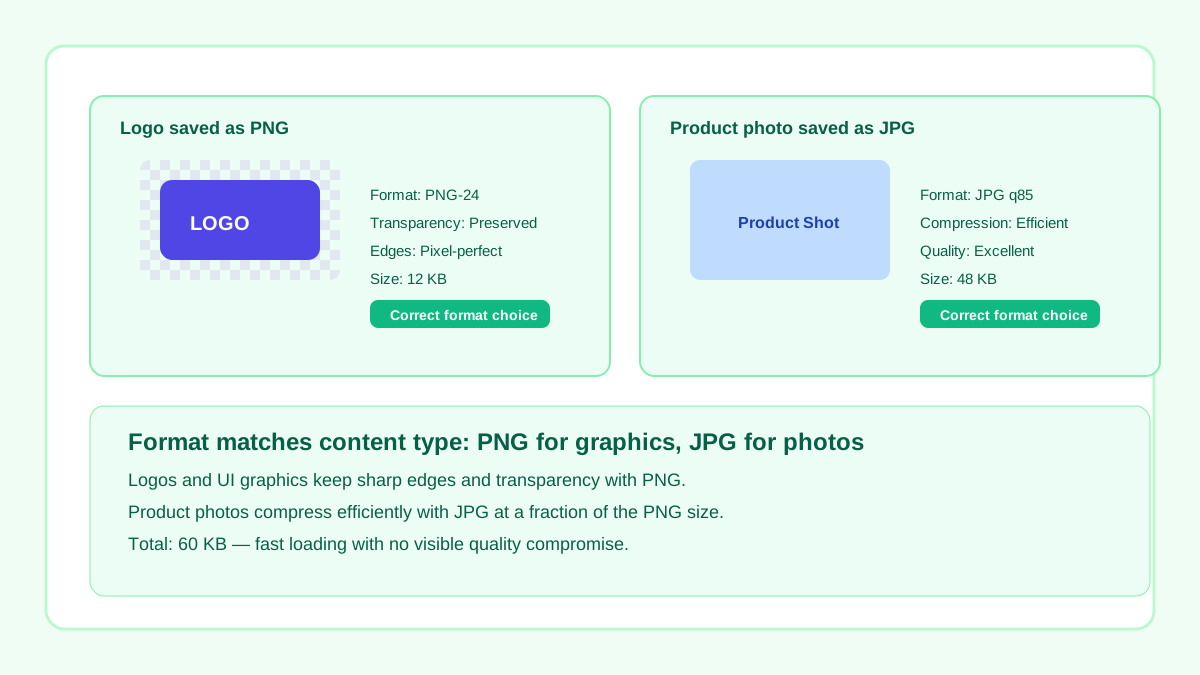
Logo stays pixel-perfect in PNG with transparency; product photo compresses efficiently in JPG.
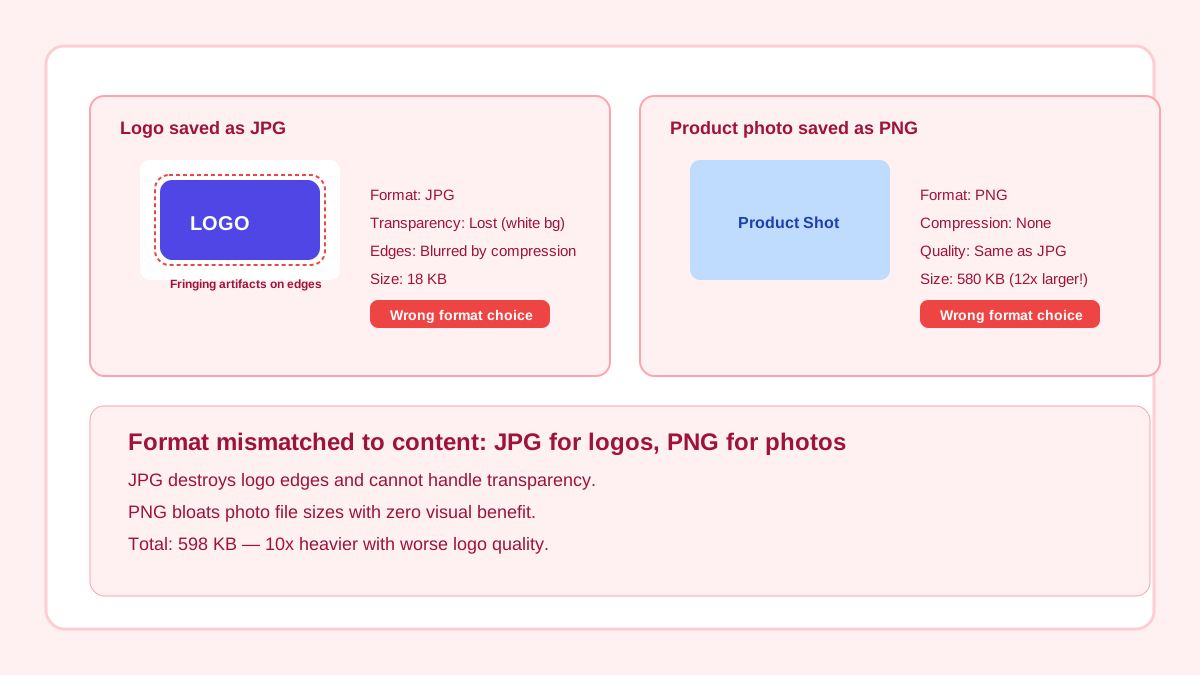
Logo shows JPG fringing and loses transparency; product photo bloats as PNG with no quality gain.
Use this as a training aid when onboarding new content editors.
Best: PNG/SVG (high edge fidelity)
Payload goal: controlled, clarity prioritized
Best: JPG/WebP (lower payload)
Payload goal: strong compression, acceptable detail
Related workflow
Explore related tools to keep your workflow fast and consistent.
