WCAG contrast validation model
- OK Token pair audit
- OK State checks
- OK AA/AAA validation
Practical Guide
Use practical contrast testing rules to ship accessible, readable UI color systems with confidence.
WCAG contrast validation model
Quick summary
Use practical contrast testing rules to ship accessible, readable UI color systems with confidence.
Changelog: content updated 2026-03-01, references verified 2026-02-24.
Field Note
Contrast compliance should be part of design system operations, not a one-time accessibility sweep before release.
Map text/background combinations to token pairs and flag failures at system level.
Validate hero overlays and CTA buttons against AA thresholds before publish.
Re-test semantic color pairs because polarity changes can break previously passing combos.
Pre-publish QA questions
Performance Deep Dive
Image budget defaults, CWV-ready workflows, and regression prevention checks.
| Use case | Setting | Baseline | Target |
|---|---|---|---|
| LCP hero image | Preloaded, right-sized, compressed | Explicit dimensions in markup | Lower LCP and stable render |
| Feed and gallery assets | Responsive variants + lazy loading offscreen | Max payload thresholds by template | Lower transfer and smoother scroll |
| Search-discovery image set | Canonical URL and metadata hygiene | Sitemap + alt text quality checks | Higher indexable image coverage |
Before
Oversized hero media, missing dimensions, and inconsistent delivery patterns.
After
Template-level image budgets and standardized loading/fallback behavior.
Typical outcome
More stable CWV metrics and measurable reduction in image-related regressions.
| Issue | Cause | Fix |
|---|---|---|
| LCP does not improve after compression | Hero still oversized or incorrectly prioritized | Rework hero dimensions and loading priority path first. |
| CLS worsens after redesign | Missing reserved image space | Enforce width/height or aspect-ratio placeholders in components. |
| Indexing gains are weak | Discovery workflow missing sitemap/alt coverage | Connect optimization with crawl and metadata processes. |
| Text Type | AA | AAA |
|---|---|---|
| Normal body text | 4.5:1 | 7:1 |
| Large/bold text | 3:1 | 4.5:1 |
| UI essential states | 3:1 minimum | Prefer higher for readability |
Who this is for
What success looks like
Tested on
Scope and limits
Key takeaways
Common mistakes to avoid
30-minute action plan
Recommended tool stack
Related guides in this track
Shrink PNG files aggressively while preserving transparency, sharp edges, and brand quality.
7 min read
Speed up WordPress pages with a practical compression workflow for uploads, themes, and media.
8 min read
Move LCP and CLS in the right direction with an image-first optimization sequence.
10 min read
Help search engines discover, crawl, and index important image assets more reliably.
9 min read
Execution depth
Fast Pass
15-20 min
Fix the highest-risk issue first and ship a validated minimum improvement.
Standard Rollout
45-60 min
Apply the full guide workflow with QA checks before publishing broadly.
Team Standardization
90+ min
Convert the workflow into reusable presets, checklists, and team operating rules.
| Troubleshooting Signal | Likely Cause | Recommended Fix |
|---|---|---|
| LCP remains high after compression | Hero image dimensions/loading strategy still suboptimal | Right-size hero assets and prioritize their delivery path. |
| CLS increases after image changes | Width/height or aspect ratio not reserved | Declare intrinsic dimensions and keep layout slots stable. |
| No SEO uplift after optimization | Discovery/indexing flow not updated | Align image sitemap, alt text, and crawlable delivery URLs. |
Post-publish KPI checks
Detailed implementation blueprint
Quantify where images are currently hurting speed and search visibility.
Done when: You have a prioritized target list with measurable baseline metrics.
Implement the smallest set of image changes that move key metrics quickly.
Done when: Critical templates show clear metric improvement in validation checks.
Bake optimizations into reusable components so gains persist.
Done when: New content inherits optimized image behavior by default.
Catch regressions early and keep improvements compounding.
Done when: Image performance remains within targets release after release.
Quality gate checklist
Advanced wins
Execution next step
Run a primary tool action, review one companion guide, then apply the rollout checklist.
| Role | Responsibility |
|---|---|
| Design | Define semantic color pairs and validate all state variants in component specs. |
| Engineering | Implement tokens consistently and block hardcoded color drift in components. |
| QA/Accessibility | Run contrast checks on key flows and ensure hover/focus states also pass. |
These are the minimum contrast ratios required by WCAG 2.1 for text and UI elements.
| Element | AA Minimum | AAA Minimum | Notes |
|---|---|---|---|
| Normal text (<18px) | 4.5:1 | 7:1 | Body copy, labels, descriptions |
| Large text (≥18px bold / ≥24px) | 3:1 | 4.5:1 | Headings, large buttons |
| UI components & graphics | 3:1 | — | Icons, form borders, focus rings |
| Disabled elements | Exempt | Exempt | Not required but be cautious |
Using CSS custom properties (design tokens) prevents hardcoded color drift and makes contrast audits systematic.
:root {
  /* Pre-validated contrast pairs */
  --text-primary: #1e293b;    /* slate-800 */
  --bg-primary: #ffffff;      /* 15.39:1 ratio ✓ AA + AAA */

  --text-muted: #64748b;      /* slate-500 */
  --bg-surface: #ffffff;      /* 4.78:1 ratio ✓ AA */

  --text-inverse: #f8fafc;    /* slate-50 */
  --bg-inverse: #0f172a;      /* 18.07:1 ratio ✓ AA + AAA */
}

/* Usage — all contrast validated at token level */
.card-body { color: var(--text-primary); background: var(--bg-primary); }
.card-meta { color: var(--text-muted); background: var(--bg-surface); }Follow this sequence to find, fix, and prevent contrast failures across your component library.
List every foreground/background combination used in text, icons, and interactive elements.
Test each pair against WCAG AA (4.5:1 text, 3:1 large text) and AAA where required.
Adjust hue, lightness, or add overlays until every combination meets the target level.
Re-verify after dark mode, brand, or seasonal theme changes to catch regressions early.
Systematic contrast validation prevents accessibility failures before they reach production.
These examples show the difference between validated and untested colour combinations.
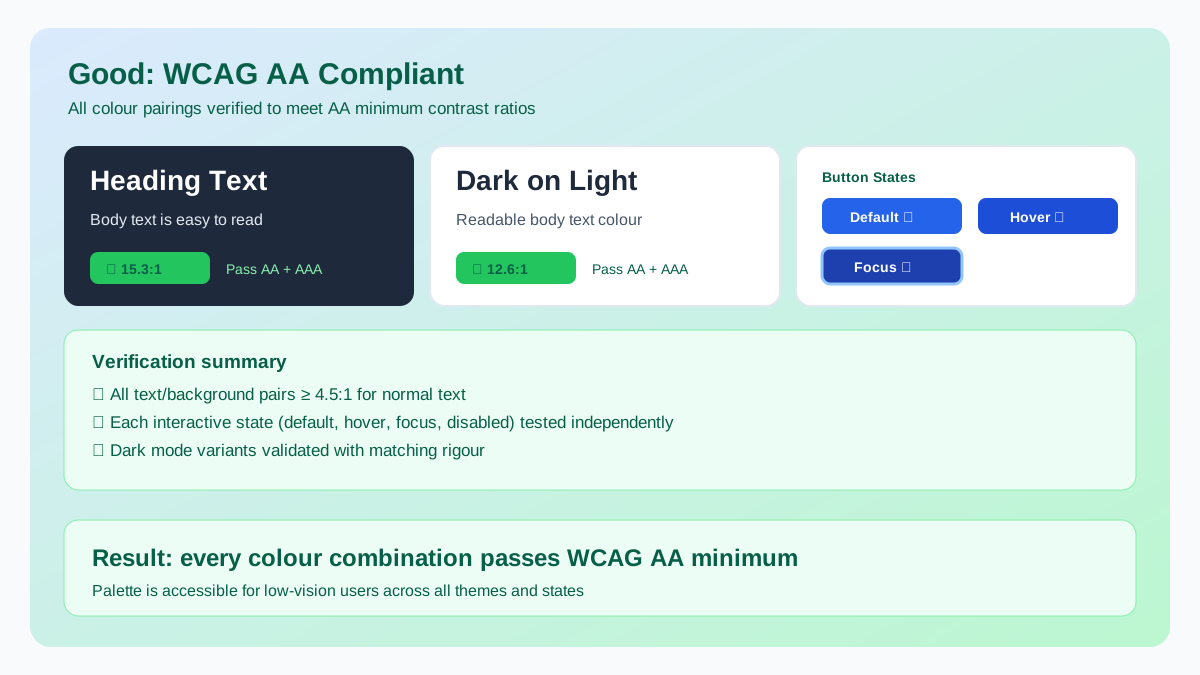
Text/background pair validated at 4.5:1 or higher across all component states.
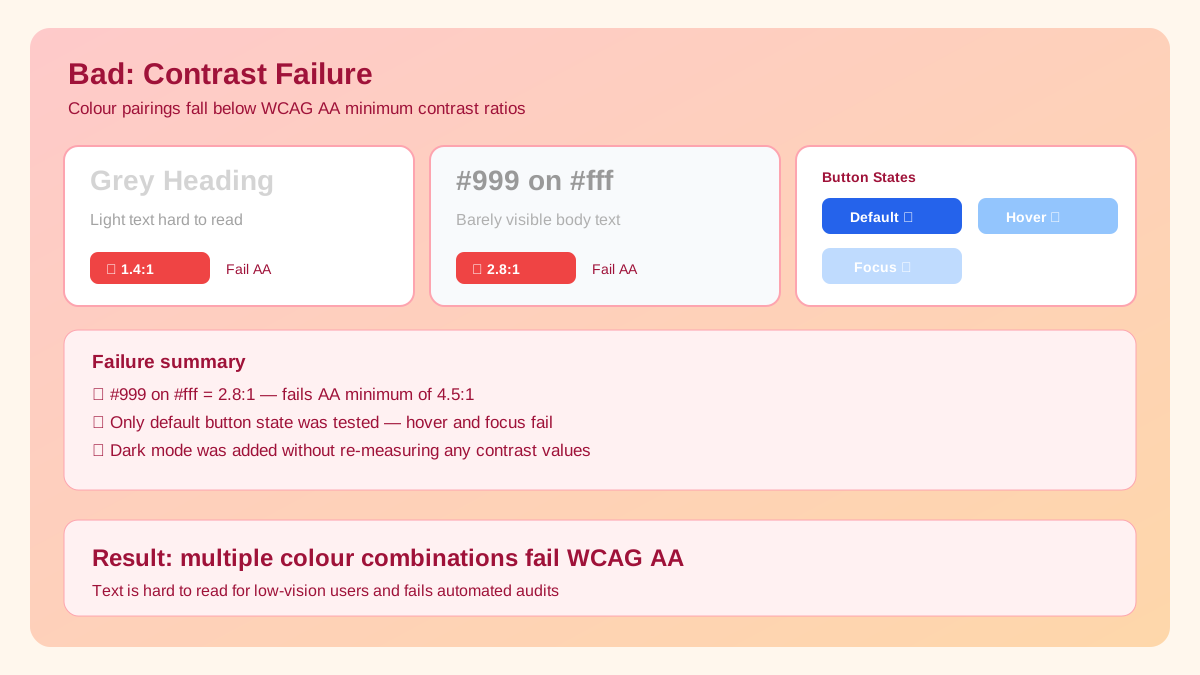
Light grey on white (#999 on #fff = 2.8:1) — fails WCAG AA minimum.
Related workflow
Explore related tools to keep your workflow fast and consistent.
Keep moving
Test and tune contrast-friendly color pairs quickly.
Open tool
Keep moving
Turn brand colors into semantic, accessible tokens.
Open tool
Keep moving
Apply contrast-safe gradients to backgrounds and overlays.
Open tool
